
Il borgo che ritorna
The village that returns
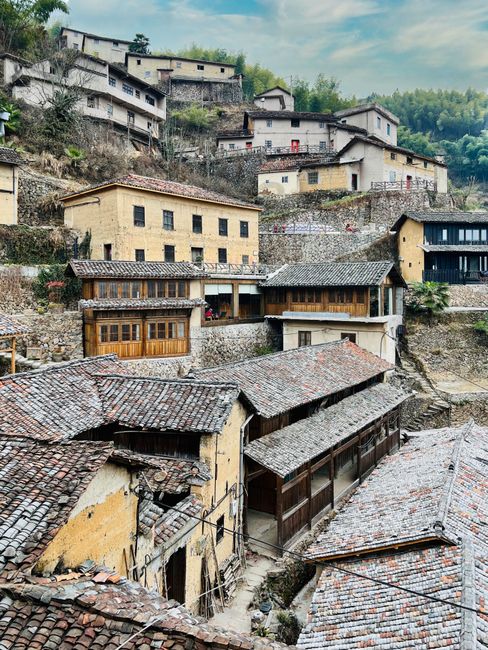
Castel del Giudice is a village of three hundred souls perched on a hill in upper Molise. In winter it snows heavily and the road to get there climbs slowly between the beech trees. Until a few years ago it seemed destined to disappear, like so many others in this region small and forgotten. The young people left for Rome or for the North, the old stayed and the houses emptied one after another.
Then something changed. In two thousand fifteen the mayor and the council town decided to try a experiment: put up for sale the houses abandoned of the old centre for the price symbolic of one euro. The only condition was that the buyer renovate the house within three years and that there come actually to live, at least for part of the year. The municipality did not earn a thing, but hoped to not die.

Read it with audio, tap any word, keep the ones you want to remember.
10 minutes a day free · no card needed
The applications arrived from every corner. A couple of Milan tired of offices. A lady German in retirement who had dreamed of Italy all her life. A young Argentine with the grandparents born right there and a passport Italian finally in his pocket. A family from Naples who wanted to raise the children away from traffic. The mayor and the his staff chose with care: they did not want speculators nor dreamers who would flee at the first winter.
Three years later something could already be seen . The windows closed for twenty years opened again , some plaster new changed colour on the facades. The German lady opened a workshop of weaving and taught to the girls of the village. The Argentine reopened the old carpentry shop of his great-grandfather. The couple from Milan turned the their ground floor into a small bookshop with one table for coffee. In the square now one could hear voices different, accents that before no one would have imagined.
It was not all easy. Some elderly people watched the new arrivals with suspicion: they wondered whether they would stay really, whether they would understand the silences and the rituals of the village. The newcomers, in turn , did not always understand the unwritten rules: at what time one greets the pharmacist, to whom one asks a favour to prune the cherry tree, how one behaves at the procession of the patron saint . It took patience on all sides , and a few shared dinners.
Today the village has three hundred and twenty residents, twenty more than before, a number tiny but enormous if measured on the scale of a village so small. A primary school has opened with eleven children, a figure that before seemed impossible. The mayor says that is no miracle : it is a job slow, made of small grants, paperwork municipal, phone calls that last a afternoon long. One must that someone have the desire to stay, he says, because a village is not a museum.
In the evening, in the square, the lights come on slowly and one can hear the smell of firewood and of tomato sauce. The children run around the fountain and someone calls them in a dialect that they only half understand. No one knows whether this life will last a lifetime, whether a day will be enough a hard winter to send someone back to the city. But in the meantime the village is coming back, slowly , and that, in Molise, is already a piece of news.