
I murales di Orgosolo
The murals of Orgosolo
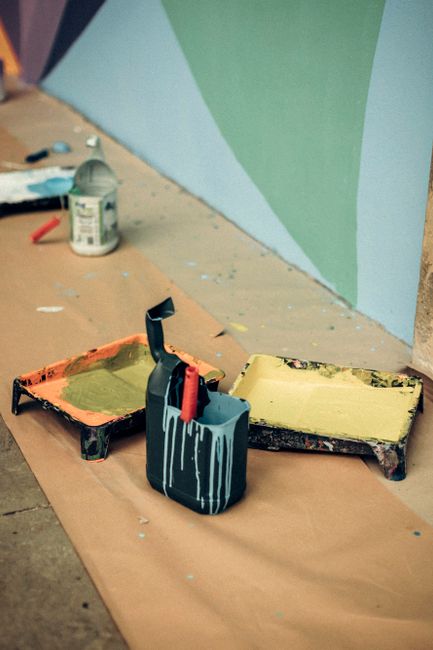
Orgosolo is a small town of the Barbagia interior of about four thousand inhabitants, perched on the slopes of the Supramonte. From afar it looks like one of the many villages of stone Sardinian, but as soon as you enter in the its streets narrow you understand that something is different. Every wall speaks. The facades of the houses, the walls of the square, even the walls of the school are covered with murals: more than two hundred paintings that tell a century of struggles.
Everything began in the 1969, when a group of young people anarchists from Milan painted the first slogans on the walls of the town. But the real tradition was born a few years later, thanks to a teacher of high school, Francesco Del Casino, who arrived from Siena in 1975. Together with the his students he transformed the walls of Orgosolo into an book open. They wanted that art would be for everyone, not only of the museums.

Read it with audio, tap any word, keep the ones you want to remember.
10 minutes a day free · no card needed
The themes are always political. On one wall you see the shepherds Sardinian who protest against the price of milk; on another the farmers South American who fight for the land. Many murals recall the resistance to the fascism, or the struggle against the occupation military of the plain of Pratobello, when in 1969 the entire town went down into the street to prevent the army from building a firing range of shooting. They won, and that victory is still painted on the walls.
The style of the murals recalls the great painters Mexican like Diego Rivera, but the faces are Sardinian: women with the headscarf black on their head, old men with the berritta, the headwear traditional, children with bare feet. The sentences are written in Italian and in Sardinian, and often they quote poets local like Peppino Mereu, who wrote against the poverty and injustice more than a century ago.
For a long time Orgosolo was famous above all for the banditry. The newspapers Italian about it spoke as of a place wild and violent, and the director Vittorio De Seta there shot a film famous, Bandits at Orgosolo. The inhabitants however did not themselves recognize in that image. The murals were born also to this: to tell who were really the Sardinians, with the their voice, not with that of the others.
I walk slowly along the main street Repubblica and I stop in front of a mural recent dedicated to the victims of the war in Palestine. Next there is a old man sitting on a chair of straw. He looks at me and smiles. "You are from outside?», he asks me in Italian with a strong accent. When to him I answer yes , he begins to tell who painted that wall and why. "It is necessary that the people know» he says. "Otherwise one forgets».
When finally I resume the road towards the center, the sun is setting behind the Supramonte. The murals change color with the light: the reds become more warm, the blacks more deep. I think that this town has found a way rare of defending itself: not with weapons, but with painting. Every wall is a voice that does not want to be silent, and as long as someone stops to read it, Orgosolo will continue to speak.