
Elena Ferrante e il mistero dell'anonimato
Elena Ferrante and the mystery of anonymity
Ludovica Sabbatini
Transcript
There is an Italian writer, read all over the world, whose true identity officially no one knows.
She signs herself Elena Ferrante, a pseudonym behind which she has hidden for decades, without ever appearing in public.

Read it with audio, tap any word, keep the ones you want to remember.
10 minutes a day free · no card needed
Global success arrived with the My Brilliant Friend quartet, published between 2011 and 2014.
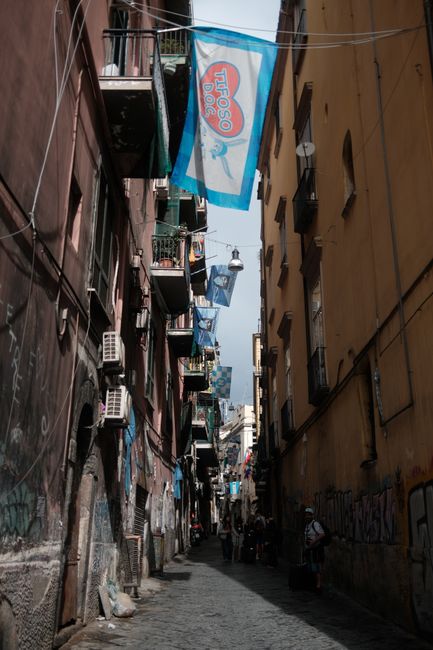
The novels follow the friendship between Elena and Lila in a poor, violent postwar Naples.
Translated into more than forty languages and turned into a television series, they made Ferrante a global literary phenomenon.
Her anonymity, however, is not a mere publicity trick, but a declared literary choice.
Ferrante maintains that a book, once published, no longer needs the presence of its author.
According to her, fame distorts reading, turning literature into a spectacle centred on the writer rather than the work.
In 2016, an Italian journalist claimed to have identified her by analysing certain financial records.
The revelation triggered a heated ethical debate about the right to anonymity versus public curiosity.
Many critics condemned that investigation as a violation, arguing that anonymity was an integral part of the work's meaning.
After all, Ferrante's novels are themselves obsessed with the theme of identity and its dissolution.
She has even coined a term, smarginatura, to describe the boundary that dissolves between self and other.
There is a fascinating paradox in all of this: an author who erases herself while writing some of the most intimate and unguarded prose in contemporary fiction.
Perhaps Ferrante's true achievement is having shown that a book can belong entirely to its readers, once the author steps aside.