
Il pane di Altamura
The bread of Altamura
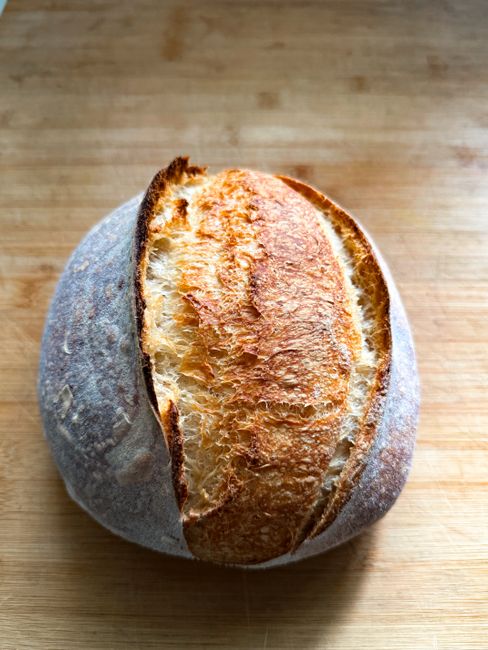
At three and a half of the morning in Altamura, when the rest of the Puglia still sleeps, Rosaria lights the first bundles of wood under the vault of stone of the oven. It is a gesture that repeats for thirty years, and that her mother and her grandmother had repeated before of her. The fire must burn for at least two hours before that the stones are sufficiently hot to bake the bread.
In the workshop next door the dough has already rested all the night. It is made with semolina reground of durum wheat, water of the Murgia and sourdough starter: nothing else. The protocol of the denomination protected it requires with rigour, but Rosaria says that would not know how to do it differently not even if to her they were to ask. Her father to her had taught to recognise the dough right by the smell slightly sour and by the bubbles on the surface, and since then the her hands know more than her clock.

Read it with audio, tap any word, keep the ones you want to remember.
10 minutes a day free · no card needed
It is told that the bread of Altamura sinks its roots in a time very distant. Already Horace, poet Latin born in these lands, wrote about a bread so good that the traveller wise some of it would have taken one loaf on the shoulders for the journey. For centuries the families of farmers kneaded at home and took the loaves to the oven communal to the baking. Each loaf was branded with the initials of the head of family so that no one himself it would mix up with another one.
When the oven reaches the three hundred degrees, Rosaria removes the embers with a long pole of iron and cleans the floor of baking with a rag wet. She forms then the loaves with a gesture swift and dry: she folds the dough on itself itself, it flips on the peel and it slides into the darkness warm of the oven. The shape typical is high and folded over, called u sckuanète in dialect, or more flat and round like a hat of a priest.
While the bread bakes, begins to spread through the alley a smell that the neighbours know by heart. It is the signal that the day can begin. Don Michele opens the door of the church of opposite and greets with a nod, a woman herself leans out from the balcony to ask whether the bread is ready. Rosaria smiles and replies to have patience, because the bread true does not itself hurry ever. To her would please that the young people understood this slowness, but she knows that is not is easy.
Her son Matteo has twenty-eight years and for a long time did not had want to know anything about it of the oven. He had gone to study in Bologna and seemed that would not would return ever again. Then something had changed: perhaps the weariness of the city, perhaps the longing of the smell of home. He has come back for a year and now kneads next to his mother. He would like to open a small website to ship the bread to the Puglians emigrated to the north, but Rosaria fears that the bread loses something during the journey.
When the first loaves come out from the oven are almost the six. The crust is thick a finger, of a colour amber that shifts to the brown on the ridges, and crackles as soon as is placed on the counter. Inside the crumb stays straw yellow, airy and moist: it keeps soft for days on end, a miracle that once a time allowed to the shepherds to take with them a loaf on the Murgia for an entire week.
The first customers arrive a little later. There is who buys half a loaf for two people and who of them wants three for to fill the freezer of home. A teacher on pension recounts that as a child would carry the bread warm under the apron to not let it cool during the walk. A young man buys a loaf and asks if Rosaria has ever thought about stopping. She laughs and replies that as long as someone will want to a bread like that, she will continue to light the oven at three and a half in the morning.