
L'isola che è una soglia
The island that is a threshold
Whoever looks at a map of the Mediterranean with sufficient attention will notice soon of a detail that the textbooks of geography repeat for decades: Lampedusa finds itself finds closer close to the coasts of Tunisia than to those of Sicily. One hundred thirty-eight kilometers of sea separate it separate from Africa, more than two hundred from Europe of which yet it belongs. It is a of those asymmetries that cartography cartography records without comment, and which history history recent has transformed into something more more than a curiosity.
The island is small: twenty square kilometers square barely, a single village clinging to the harbor, a few hamlets inland, and then rocks limestone that plunge into a sea of a blue that in summer seems staged. The northern coast northern is high and impervious, beaten by the winds; the southern one slopes slopes more gently toward Africa, and here are found the coves which the guidebooks tourist continue to to call paradisiacal, with an adjective that those who live on the spot have learned to endure with a mixture of gratitude and of annoyance.

Read it with audio, tap any word, keep the ones you want to remember.
10 minutes a day free · no card needed
For centuries Lampedusa was little more than than a port of call for fishermen, smugglers and shipwrecked. The Bourbons there sent a few settler in the nineteenth century, more to assert a sovereignty contested than out of true conviction economic. The twentieth century brought brought a military base, an airstrip modest and a summer tourism summer that for a few decade seemed to be able to suffice as vocation definitive of the island. Then have arrived the boats, and the island became became a different thing without ceasing to be the one of before.
The first crossings significant date back to the early years nineties, but it is in the last decade that the phenomenon has assumed the features structural that today anyone recognizes. The routes have changed according to depending on the crises and of the agreements, the countries of departure have alternated alternated, the numbers have oscillated with a violence that would seem random to those who do not knew how to read beneath them them the wars, the droughts and the diplomacies. What that has not is changed is the landing point: this rock southern continues to be the first piece of land European that many thousands of people touch every year, when they survive to the voyage.
Salvatore Cassarà has sixty-three years and for forty of these he has worked as a fisherman. He has lost a brother at sea in the 1986, in shipwreck of which speaks does not speak unless unless when someone asks him asks with a certain delicacy. For some years he no longer goes out any more with the trawler: arthritis has taken has taken from him his hands, he says, and the price of diesel the rest. He coordinates a small group of volunteers who meet gather at the pier old when a notification arrives a notification, and distribute blankets, water and warm milk warm in the first hours following to the landing.
You find him is found almost always at the bar in front of the town hall, at a small table in the corner, with a coffee and the phone in plain sight. When asked is asked why he does it, he replies with a shrug of shoulders that is not is of condescension but of obviousness: here the sea is not is an idea, and anyone has been on a boat knows that in front of a a shipwrecked person one does does what that is must do, without asking oneself where from he comes nor why he has set out to travel. It is a argument simple that those who come from outside tend to complicate out of habit, and which Salvatore hands back intact after having listened with politeness.
The inhabitants of Lampedusa are today slightly more than of six thousand, in winter a few hundred fewer fewer. In recent recent years they have grown accustomed to coexist with a flow that often often surpasses them surpasses them in number, and with the idea of inhabiting a place of of which the rest of Europe speaks continually without having ever seen it. It is a condition that produces both pride and fatigue. The pride comes from knowing of being equal to of a trial that elsewhere is discussed as if it were a problem theoretical; the fatigue comes from the fact that for twenty years now this side someone promises solutions definitive and then goes away away, and the island remains to do what that it knows how to do.
There is those who maintain that the island has paid a price high for being become a symbol. The tourism has is contracted in certain years and has is transformed in others, becoming in part a tourism of witness which the islanders welcome with some perplexity. Although they do not lack journalists and photographers serious, it happens that someone comes on visit brief and leaves with a report already written in departure, to which the island must only supply a few images of service. On this the people of Lampedusa have become both patient and distrustful, and would have preferred, in moments, to be left to their work.
Europe which of which is is spoken here is not is the one of the capitals. It is a Europe seen from the bottom and from the south, in which its are known the naval of high seas and the officials in transit better than how much is is are known the treaties or the speeches in chamber. Salvatore speaks of it speaks as one speaks of a distant relative distant of whom one knows that exists and toward whom one feels must something, without knowing exactly what thing nor why. Although he is not is a man of slogans, a phrase escapes him escapes at a certain point: we are the threshold, and on the threshold one does not sits sit no one.
It is a remark of which is is understood the meaning better in the evening, when one climbs toward the lighthouse of Capo Grecale and one sees the lights of some fishing boat toward south and nothing else toward north. From up there one understands that the phrase about the textbooks of geography is not was a detail pedantic but a true description of the place: Tunis is closer close than Palermo, and the wind that dries the sweat comes from Africa and not from Italy. If anyone had asked twenty years ago the islanders if they felt more African or more European, they would have laughed at the question; today some reply with a pause before of saying neither the one nor the other, people of Lampedusa, and that is enough.
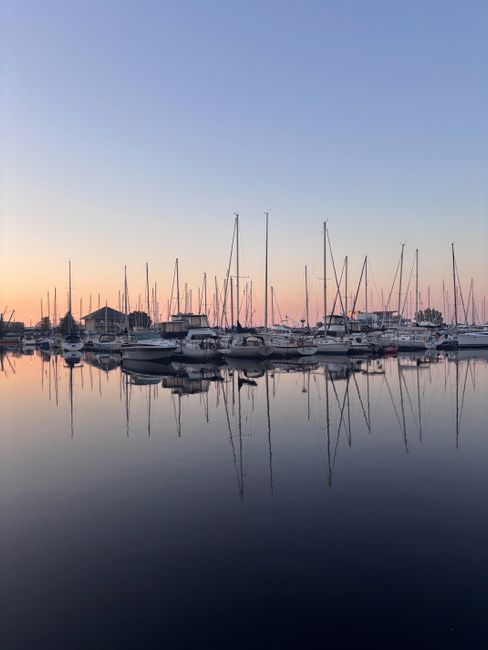
At dawn the harbor fills fills with a light oblique that cuts in two the boats at anchor. Salvatore is already come down to the old pier old with two thermoses and a stack of blankets folded badly. From the bottom of the harbor is seen approaching a patrol boat with its engine running at minimum and on the deck some figures wrapped in sheets thermal silver. Salvatore does not say anything, sets down the thermoses on the edge of a low wall and waits. The sun rises slowly above the island, and the first seagulls begin to call to one another above the water flat.