
La nebbia sulla pianura
The fog over the plain
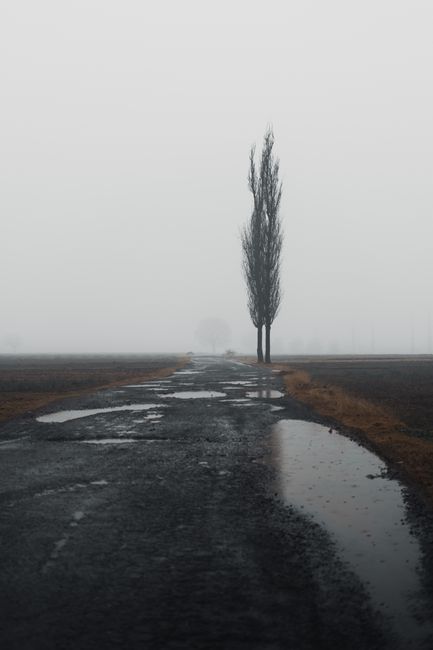
The fog had fallen suddenly shortly after the tollbooth, as if someone had pulled a curtain over the fields. Doctor Doctor Vianello slowed down the speed and turned on the fog lights, although he knew perfectly well that would not would be of much use for much. The plain had had closed upon itself like a room without windows, and the car advanced slowly in a milk grey that did not promise anything.
It was left the hospital at five a quarter to quarter, when the sky over the car park was still of that colour undecided that in November is is no longer day and not is yet evening. The nurse had had handed in silence the envelope with the effects of the signora Bertelli: a book of Pavese with its corner folded, a pair of glasses, a dressing gown folded with care. He had taken it to deliver it to the niece, who lived in the village and had not had made it in time to come.

Read it with audio, tap any word, keep the ones you want to remember.
10 minutes a day free · no card needed
The death had come as he had foreseen, without jolts nor surprises. At bottom it was for this that they had placed her in that ward quiet at the back of the corridor, where one closed the shutters early and one spoke in voice low. He had taken care of it for weeks, signing prescriptions that served more to himself himself than to the patient, as is done with the old whom one wants to be kind to. Now it was finished, and to the place of the relief that one would have expected he felt only a weariness old of days.
A truck him overtook on the left with a hiss of water and vanished ahead, swallowed up in two seconds. There remained only the taillights red, and then not even those those. The doctor recognised on his his right the silhouette of a poplar isolated, darker darker than the rest, and told told himself that there were still twenty kilometres to the village, perhaps more more with such. The poplar was always been there, since when he was a boy and used to ride by bicycle to his aunt.
Signora Signora Bertelli had been the his teacher of fourth grade. At that time she wore her hair gathered and a smock black over the dress, and would read to aloud aloud the poems as if if they were things important and private, not exercises of a textbook. It came back to him in mind the day in which she had kept him back after the bell to tell him that he wrote in a way strange for a child of nine years, and that he should not stop. He had stopped the same all the same, a few years later, to enrol in medicine. Perhaps it had been been the first person that had had noticed of him for something that was not was obedience.
There appeared on the right the reflection intermittent of a red light, and a bell insistent that for a moment seemed to him to come from the corridor of the hospital. It was the level crossing crossing of Roncoferraro. He stopped stopped, turned off the engine, and for a few minutes there was there was nothing else than the bell in the white. The train went by finally finally, invisible, a roar of iron that seemed as if it would belong to no place. He thought that on that train someone was returning home home like him, and that perhaps would not know that be already older than he believed.
The barriers rose rose with the their slowness mechanical. He set off again in first, and for a stretch the road ran alongside a canal that could not could be seen but could be sensed as an odour of leaves rotting and of still water. In the last days Signora Signora Bertelli no longer recognised any longer the places, but recognised still the voices. One morning she had had asked him whether it was raining still in the village, as if the hospital and the village were two climates different and she found herself happened to be in exile in the one that was wrong. He to her had answered yes yes, although it was not raining.
At the curve before of Quistello there was a small shrine votive with a Madonna of plaster faded by the rains. Every time someone there would leave some flowers, even though in that spot no one had died there for years. It was a gesture of prudence peasant, like someone who greets twice twice to be on the safe side. Doctor Doctor Vianello slowed down without knowing why. The shrine emerged from the white for a moment, with its its bunch of chrysanthemums already a little a little wilted, and then vanished behind him his shoulders. It was the first of November, he remembered. The dead were still fresh in everyone.
He surprised himself in counting the his own dead as one counts the windows of a house that which one no longer one lives any more. His father, dead at sixty-eight years old, the age that he himself would reach in February. His mother, eight years later. A younger brother younger younger who had had not made it managed to complete a year and of whom he knew only through a few photographs taken from the silence of his parents. Patients of the last thirty years, the whose names to him would come back now in a order that was not was any longer the one alphabetical of the files. Signora Signora Bertelli was adding herself to the list without asking permission permission, as always had done done the others.
The bell tower of the village appeared before the houses, as happens always in the fog and in dreams, a profile of bricks darker darker against a white thicker denser. It was striking six six as he turned into the provincial road. In the square there was there almost no one: an old man old with a dog, two girls under the arcades who were laughing softly at something. He parked in front of the main door of the niece and remained a moment in the driver's seat, with the envelope on the seat beside him. He thought that he would have to find a few words, but none of them came to him none that did not have already said other times to someone else.
When at last he got out, the air smelled of firewood burnt and of leaves wet. The niece opened the door before that he had finished of ringing the bell, as if she had been had waiting for him at the window. She had the eyes dry and her hair tied back as her aunt used to wear her aunt as a young woman, and this resemblance sudden him struck more than what he expected. He handed to her the envelope, said two sentences that he knew of having already said, and then he turned to look the square. The fog had had lifted a little a few metres, and the streetlights could now be seen the streetlights lit all the way to the end, one after the other, like a sentence put at last in order.